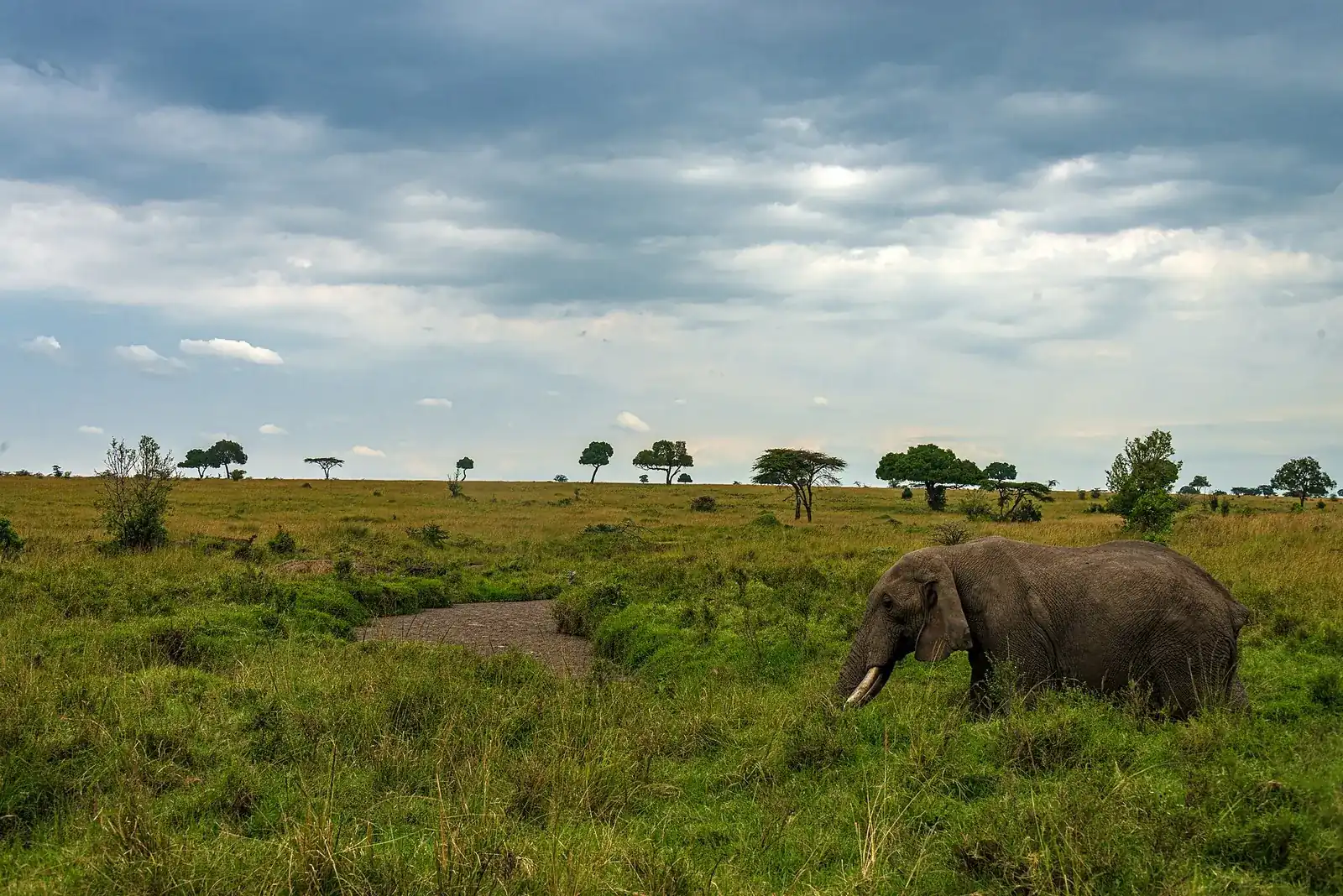

When to go
The migration is seasonal wildlife movement rather than a scheduled performance. The Kenyan part of the ecosystem can be a focus in the middle and later part of the year, but rainfall and grazing determine where herds move. A particular crossing cannot be promised for a date, week or camp.
Resident wildlife makes the Mara relevant outside migration travel. During wetter periods, ask about the last track to camp, vehicle capability and cancellation arrangements. During the most sought-after migration dates, book the location you need before designing the rest of the trip; a cheap room on the wrong side of the ecosystem may consume the saving in transfers.
Sources: Mara Conservancy: conservation fees · Mara Conservancy: visitor information
How to get there
For a road arrival, get directions to the exact gate and camp, not only a pin labelled “Masai Mara”. The reserve and surrounding conservancies occupy a wide area. Ask whether the quotation includes the final rough-road section and whether the arrival day will leave useful time for a drive.
Safarilink lists the Mara among its destinations. Match the named airstrip to the camp’s collection arrangements and confirm whether the flight has intermediate stops. A flight into the ecosystem still needs a ground transfer, and that transfer may involve entry fees or a different management area.
Sources: Safarilink: scheduled Kenya flights · Mara Conservancy: conservation fees
Where to make your base
The Mara Triangle lies on the western side of the Mara River; other reserve areas and neighbouring conservancies offer different positions. Choose around the experience you want and the access your camp can actually provide. Do not assume a central-looking map pin makes river crossings, several gates and every wildlife area equally convenient.
If staying in a conservancy, ask whether the camp’s normal drives remain there, how a reserve day is charged and which activities are authorised. Some conservancies permit activities under their own rules that are not generally available in the reserve. Access can be restricted to participating camps, so confirm the particular property rather than generalising from the word conservancy.
Sources: Mara Conservancy: conservation fees
Wildlife, crowds and road conditions
Expect long periods of observing, waiting and moving between sightings. Busy sightings can attract several vehicles, especially around migration interest. A good guide should explain approach distances and road rules rather than promising to get closer at any cost.
Wildlife has priority over the shot you imagined. A crossing may not happen while you wait, cats may rest in cover and rain can change the day’s route. Decide whether you value a patient day in one area or a checklist of widely separated locations; trying to do both often means more driving than observation.
Sources: Mara Conservancy: conservation fees
A useful day on the ground
Keep one full day free of transfers. Discuss a morning departure, a return to camp or a planned picnic, and the area you will cover within your paid access. Have water, sun protection, layers and your camera ready before leaving.
If a river crossing is a goal, agree how long you are comfortable waiting and what alternatives make the day worthwhile. Book a balloon flight as a separate weather-dependent activity, with a clear pickup, landing transfer and refund policy. It should not be the reason to schedule an impossible same-day departure.
Sources: Mara Conservancy: conservation fees
What the price should include
Mara Conservancy publishes nonresident adult fees of USD 100 in January-June and USD 200 in July-December; children aged nine to seventeen are USD 50, while children aged eight and below are free. Its visitor page also describes gate timing and payment conditions. Apply the rules for your precise stay rather than assuming a night of accommodation buys a full extra day of entry.
Reserve entry, conservancy charges, vehicle fees and activities are different lines. Ask the operator to list each charge and who receives it. Mara Triangle entry points list card and M-PESA payment and state that cash is not accepted. Keep the issued payment confirmation offline.
Sources: Mara Conservancy: conservation fees
How it fits into a route
The Mara pairs naturally with Nairobi for international access and can fit a wider Rift Valley route through Naivasha or Nakuru. Those combinations still need travel days; they are not neighbouring attractions that can all be reached between game drives.
For a coast extension, compare a confirmed flight routing with returning through Nairobi. Keep a buffer before an international departure and check whether a domestic connection uses Wilson or JKIA. Choose fewer bases if the combined safari-and-beach route becomes a sequence of check-ins.
Sources: Mara Conservancy: conservation fees
Map reference
Approximate geographical reference: latitude -1.49, longitude 35.14. This locates the destination broadly; use the confirmed gate, airstrip, trailhead or accommodation pin for the actual journey.
-1.49, 35.14Questions & answers
Is the Maasai Mara managed by KWS?
No. Its reserve fee arrangements are county-based. Mara Conservancy publishes the Triangle visitor rules; KWS park tickets do not replace Mara entry.
What is the adult nonresident fee?
The Mara Conservancy’s published table lists USD 100 for January-June and USD 200 for July-December, checked 20 September 2026. Confirm the applicable gate and fee period.
Will I see a river crossing in August?
A crossing is never guaranteed. Herd location and movement depend on conditions, and long waits can end without a crossing.
Does a conservancy stay include the reserve?
Only if the booking explicitly includes it. Conservancy fees and reserve entry can be separate.
How many nights should I plan?
Three nights is our starting planning suggestion, giving time beyond arrival and departure. Migration-focused travellers may prefer more.
Sources & verification
Checked on 21 September 2026. Prices apply only to the visitor category and dates stated. Route timings, suggested stays and budget scenarios are editorial planning estimates unless a source is specified.
- Mara Conservancy: conservation fees - checked 20 September 2026.
- Mara Conservancy: visitor information - checked 20 September 2026.
- Safarilink: scheduled Kenya flights - checked 20 September 2026.
- Kenya Tourism Board: regional circuits - checked 20 September 2026.
- Wikidata - Maasai Mara geographic record (CC0) - checked 21 September 2026. An approximate geographical reference, not a park gate, trailhead, hotel or navigation instruction. The original record may have coarse precision.
Published · Updated . Send a correction.