
When to go
Mist, cold and rain are part of highland planning. A landscape day can be rewarding in changing light, but visibility and road condition need flexibility. Ask about current access to the specific waterfall, viewpoint or walking route rather than a general park forecast.
If the main purpose is observing wildlife from a lodge or hide, confirm how that experience operates during your dates. If it is hiking, use a separate route and equipment plan. A dry-season label does not remove the need for rain protection, warm layers and a suitable vehicle.
Sources: KWS: Aberdare National Park · KWS conservation fees: October 2025 tariff
How to get there
The park has different approaches serving forest and moorland experiences. Give the driver the exact property or authorised meeting point and follow its current route advice. A road time to Nyeri or another nearby town does not include every final ascent or internal track.
Check vehicle suitability, especially after rain, and establish whether a guide or escort is required for your planned activity. Avoid designing a scenic traverse from a map without confirming that its roads are open and appropriate. If using an air connection, include the whole road segment after landing.
Sources: KWS: Aberdare National Park
Where to make your base
Some stays focus on watching a waterhole from a fixed lodge setting; others support outings into the highlands. Decide which rhythm you want before booking. A quiet viewing deck and a day spent travelling to waterfalls can both be worthwhile but are not the same product.
Ask about the exact room and shared viewing arrangements, meal times and whether there are restrictions on leaving the property. If an activity begins early, confirm breakfast and transfer logistics. If travelling with children, check participation rules rather than assuming all lodge-based experiences are unrestricted.
Sources: KWS: Aberdare National Park
Wildlife, crowds and road conditions
Forest wildlife can be less visible than animals on an open plain. Patience, sounds and habitat observation become part of the visit. Do not judge the destination only by how many large mammals are seen through a vehicle window.
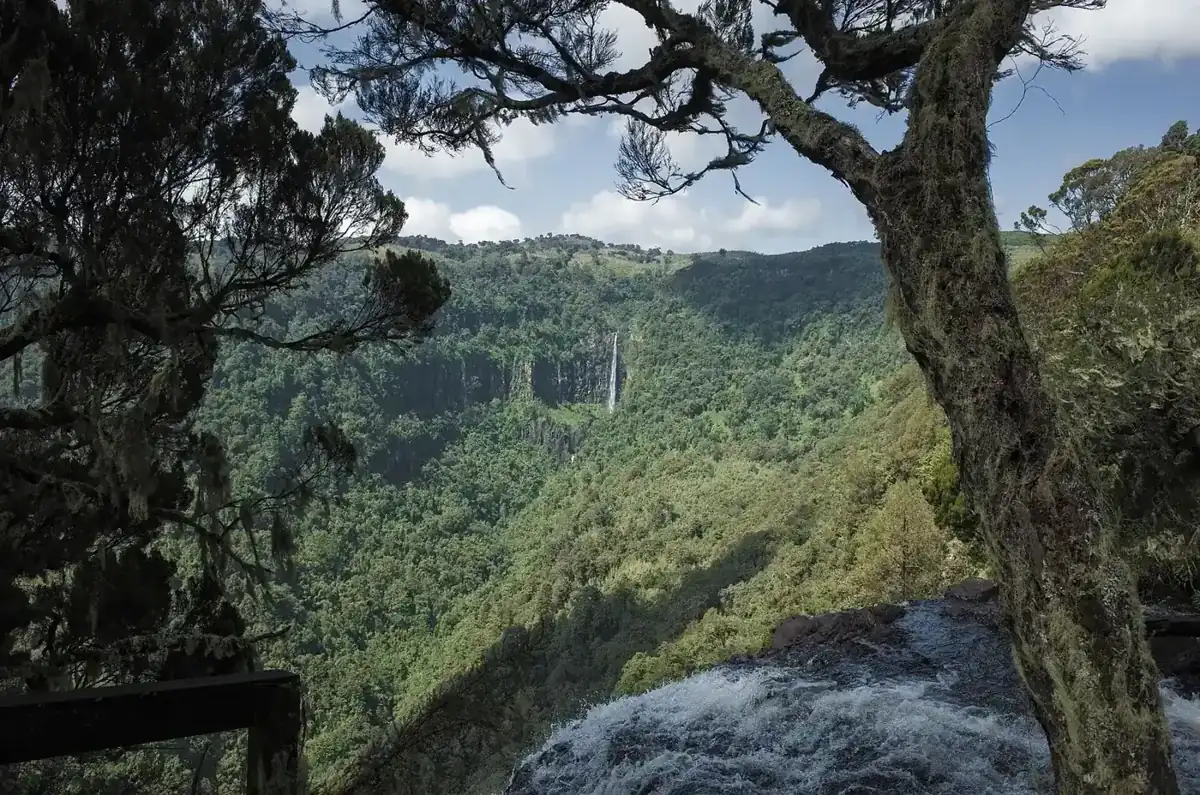
Moorland and waterfall outings can involve wind, cold and slippery ground. Keep to authorised paths and safe viewing areas. A waterfall photograph is not a reason to approach an unprotected edge, and cloud can make an ambitious landscape circuit less useful than a shorter local walk.
Sources: KWS: Aberdare National Park
A useful day on the ground
For a lodge-centred stay, leave time to settle and observe without filling every hour with transfers. Ask staff how sightings are communicated and which viewing areas are accessible. Keep expectations open: wild animals do not follow a timetable posted in the lounge.
For an active day, choose one manageable route with a guide who understands weather, daylight and group fitness. Carry food, water and layers, and agree the point at which conditions would change the plan. Finish with enough time to return on the appropriate road before darkness.
Sources: KWS: Aberdare National Park
What the price should include
Ask for a written breakdown that separates accommodation, transport, entry and optional activities. A room price alone does not establish whether meals, guiding, vehicle use or transfers are included. Check which costs are per person, per vehicle or per booking before comparing two totals.
The public sources linked below do not establish a universal current price for every local activity. Where an amount is not confirmed, obtain a dated quotation from the authority or the service provider. Keep its cancellation terms with the booking, including the procedure if weather changes the activity.
How it fits into a route
The Mount Kenya region and Ol Pejeta can form a coherent highland and northern itinerary with the Aberdares, offering mountain, forest and conservancy contrasts. Keep each stop for a distinct purpose rather than treating nearby names as obligatory.
Nakuru is another possible onward stage but changes the route. For a short trip from Nairobi, a focused Aberdare stay may be more satisfying than a large loop. Build the final transfer around the actual exit road and leave margin before flights.
Sources: KWS: Aberdare National Park
Map reference
Approximate geographical reference: latitude -0.38, longitude 36.7. This locates the destination broadly; use the confirmed gate, airstrip, trailhead or accommodation pin for the actual journey.
-0.38, 36.7Sources: Wikidata - Aberdare National Park geographic record (CC0)
Questions & answers
Is this mainly a savanna game-drive park?
No. Forest, moorland and waterfall landscapes are central to its appeal, with wildlife viewing that often requires patience.
What is the entry fee?
The published KWS tariff lists nonresident USD 70 adult and USD 40 child.
Do I need warm clothes?
Yes. Prepare for cool, wet or windy highland conditions, and use activity-specific guidance for walks.
Are all lodge stays similar?
No. Some focus on fixed waterhole viewing; others suit active landscape exploration. Confirm the programme and access.
Can I combine it with Mount Kenya?
Yes, with separate road and activity time. Decide whether the mountain stage is a foothill stay or an actual trek.
Sources & verification
Checked on 21 September 2026. Prices apply only to the visitor category and dates stated. Route timings, suggested stays and budget scenarios are editorial planning estimates unless a source is specified.
- KWS: Aberdare National Park - checked 20 September 2026.
- KWS conservation fees: October 2025 tariff - checked 20 September 2026.
- Kenya Tourism Board: regional circuits - checked 20 September 2026.
- Wikidata - Aberdare National Park geographic record (CC0) - checked 21 September 2026. An approximate geographical reference, not a park gate, trailhead, hotel or navigation instruction. The original record may have coarse precision.
Published · Updated . Send a correction.