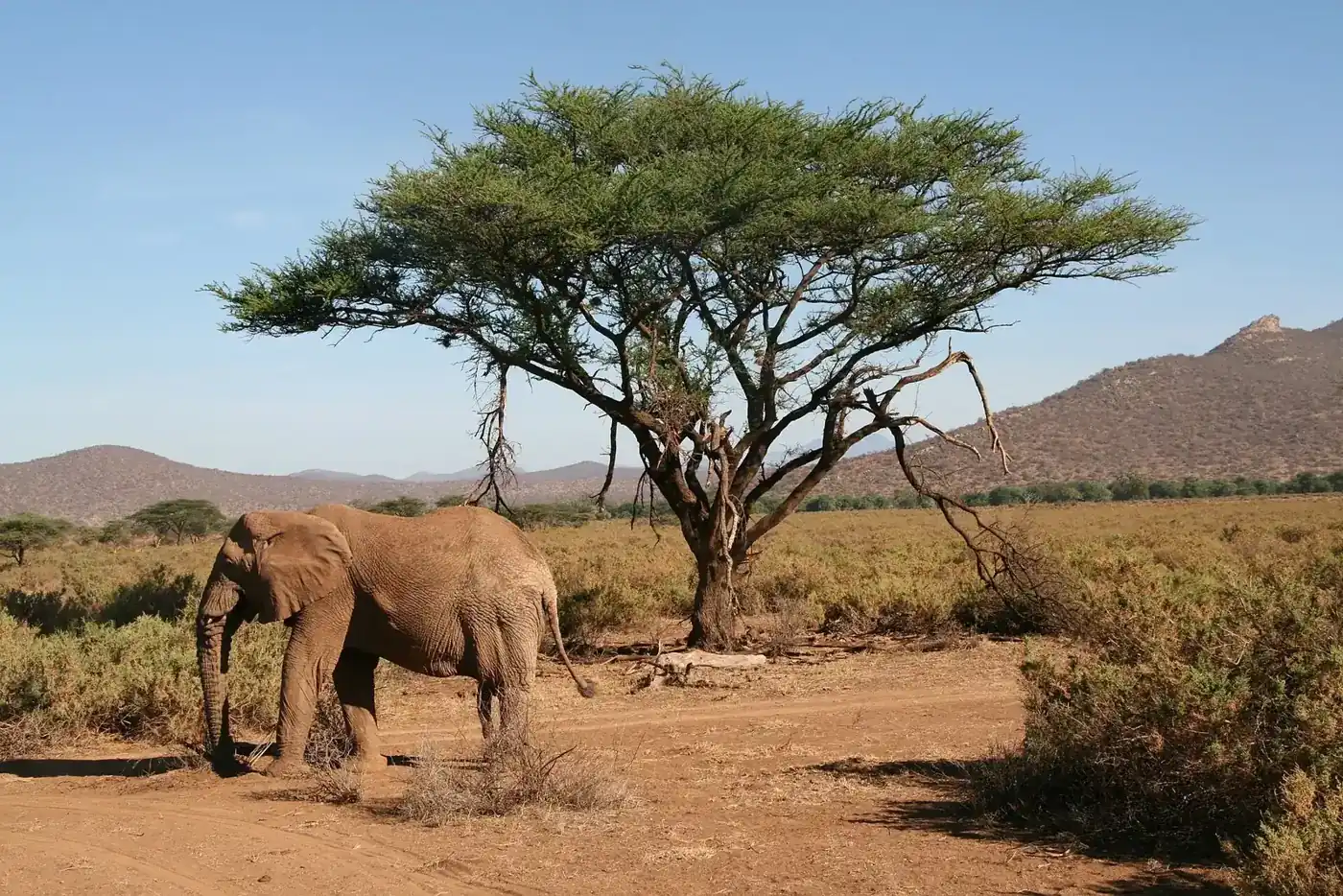

When to go
The river and recent rainfall shape the safari experience. In dry conditions, water becomes a stronger focus for wildlife and a sensible basis for planning drives. Rain can transform the landscape while also affecting local tracks and crossings.
Do not book a month only because a generic Kenya calendar calls it dry. Ask the camp about the route from the airstrip or main road and the places its drives can currently reach. If extreme heat affects your comfort, discuss the daily rhythm, shaded rest space and ventilation before choosing accommodation.
Sources: Kenya Tourism Board: regional circuits · Safarilink: scheduled Kenya flights
How to get there
A northern road route may be combined with the Nanyuki and Laikipia area. It needs a driver who has current information about the reserve approach, not just a highway estimate. Confirm which side of the river and which entrance serves your camp.
Safarilink’s destination list includes Samburu. Ask the airline and camp to agree the actual airstrip, baggage conditions and transfer arrangements. A place marketed as “Samburu” may sit in a neighbouring reserve or conservancy, so its landing and entry plan need to name that area precisely.
Sources: Safarilink: scheduled Kenya flights · Kenya Tourism Board: regional circuits
Where to make your base
Choose between a reserve-based stay and a wider northern conservancy experience according to the activities and access you want. The label on a marketing page is not enough to establish where the vehicle will drive. Ask for a map showing the property, airstrip, boundary and typical drive area.
River-side accommodation can make the watercourse part of the stay, but animals, water levels and views vary. Ask about safe movement around the property, any escorted walks between rooms and communal areas, and the rules for children. These practical details matter more than a claim that wildlife is always visible from a deck.
Wildlife, crowds and road conditions
Samburu offers a different ecological setting from the Mara and the central highlands. Discuss dry-country species with your guide without making the holiday conditional on a complete list. A birding or landscape interest gives the day value when an animal you hoped for remains out of sight.
Expect dust in dry conditions and changes to tracks after rain. The heat can favour a rhythm of active mornings and quieter middle hours. A long drive to reach the reserve followed immediately by a full excursion can be exhausting; build rest into arrival rather than treating it as lost safari time.
A useful day on the ground
Use the first full morning to understand the river corridor and the guide’s plan for conditions that day. Choose a second outing that adds a different habitat or perspective instead of automatically repeating the longest circuit.
If a community visit is offered, ask who organises it, whether participation is voluntary, who receives payment and what photography is welcome. Samburu people are contemporary communities, not a wildlife attraction. A smaller, clearly hosted visit with informed consent is more useful than a generic stop inserted without context.
What the price should include
Ask for a written breakdown that separates accommodation, transport, entry and optional activities. A room price alone does not establish whether meals, guiding, vehicle use or transfers are included. Check which costs are per person, per vehicle or per booking before comparing two totals.
The public sources linked below do not establish a universal current price for every local activity. Where an amount is not confirmed, obtain a dated quotation from the authority or the service provider. Keep its cancellation terms with the booking, including the procedure if weather changes the activity.
How it fits into a route
Ol Pejeta and the Mount Kenya region can make a coherent northern trip, with different habitats and conservation interests. They should each receive enough time to justify the transfer rather than being added as compulsory stops.
Combining Samburu with the Mara or coast can work through Nairobi or a confirmed flight routing. Verify the actual schedule and protect onward connections. For a short trip, compare one well-paced northern safari with a far-reaching circuit that spends much of its time on roads.
Map reference
Approximate geographical reference: latitude 0.62, longitude 37.53. This locates the destination broadly; use the confirmed gate, airstrip, trailhead or accommodation pin for the actual journey.
0.62, 37.53Sources: Wikidata - Samburu National Reserve geographic record (CC0)
Questions & answers
Is Samburu included in a KWS park ticket?
Do not assume so. It is a county reserve context; request the correct named reserve and current fee authority on your quotation.
What is the current nonresident fee?
We did not independently confirm a current official county tariff. Obtain a dated fee breakdown rather than relying on an unsourced blog price.
Can I fly to Samburu?
Safarilink lists Samburu. Confirm the actual airstrip and transfer for your accommodation.
How long should I stay?
Three nights is our suggested starting point for a visit that is not dominated by arrival and departure.
What fits the same road route?
Ol Pejeta and the Mount Kenya region can fit a northern itinerary, with separate transfer and activity time.
Sources & verification
Checked on 21 September 2026. Prices apply only to the visitor category and dates stated. Route timings, suggested stays and budget scenarios are editorial planning estimates unless a source is specified.
- Kenya Tourism Board: regional circuits - checked 20 September 2026.
- Safarilink: scheduled Kenya flights - checked 20 September 2026.
- Ecotourism Kenya: responsible tourism standards - checked 20 September 2026.
- Wikidata - Samburu National Reserve geographic record (CC0) - checked 21 September 2026. An approximate geographical reference, not a park gate, trailhead, hotel or navigation instruction. The original record may have coarse precision.
Published · Updated . Send a correction.