
When to go
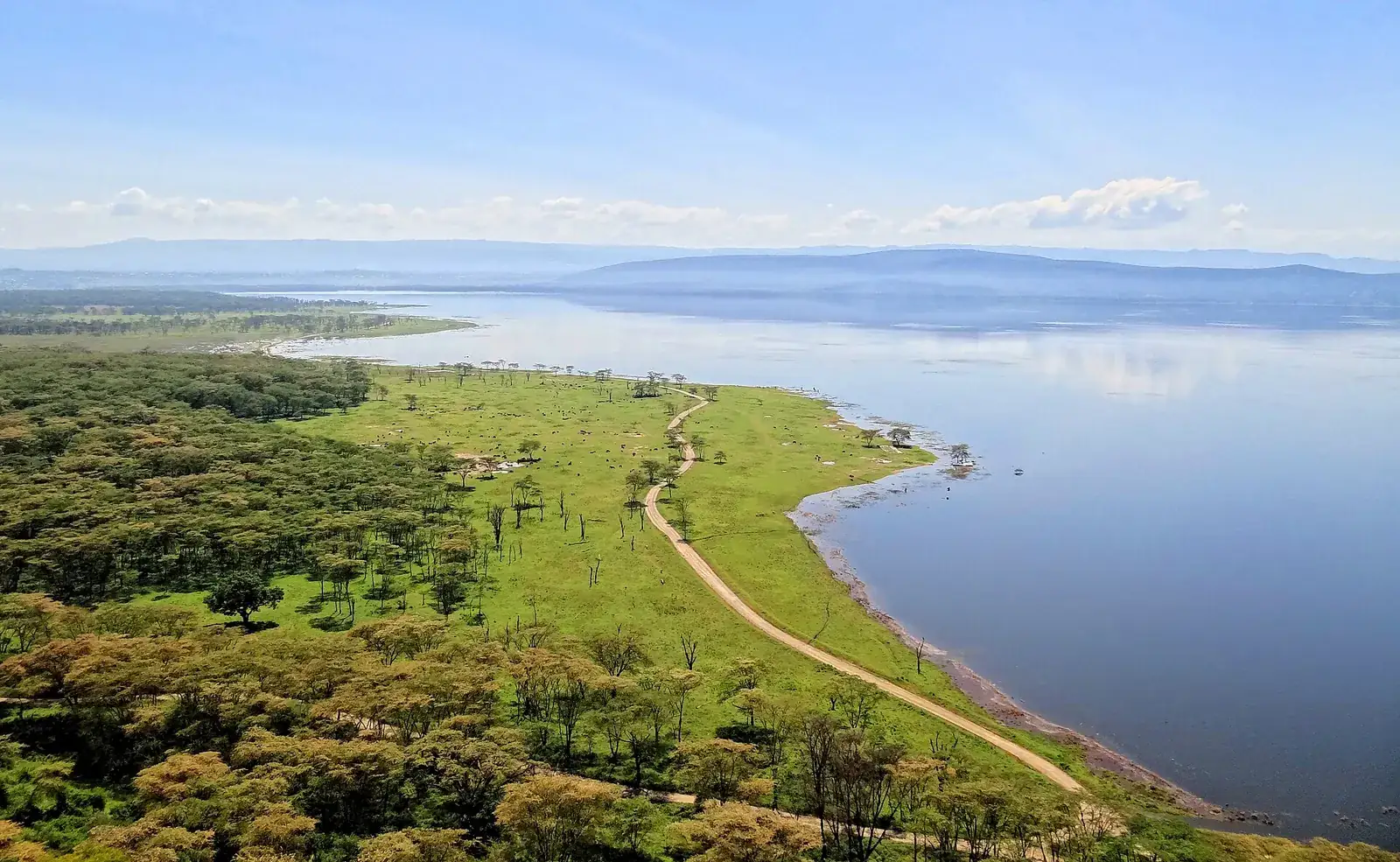
Water level, feeding conditions and bird movement determine the lake’s appearance. Photographs from another year do not establish where flamingos will be during your stay. Ask about recent observations, but treat a report as an update rather than a guarantee.
Wetter weather can change tracks and visibility; drier weather can make dust and daytime heat more noticeable. For a wildlife visit, use recent park conditions and your full Rift Valley route to choose dates. For birding, discuss target habitats with a specialist guide and allow time beyond the postcard viewpoint.
Sources: KWS: Lake Nakuru National Park · KWS conservation fees: October 2025 tariff
How to get there
Travel from Nairobi through the Rift Valley with enough time for traffic and rest stops. Give the driver the accommodation’s name, gate and arrival instructions. A property in Nakuru town, a lodge by the park and a lodge inside the boundary create different first and last hours.
Nakuru can be linked by road with Naivasha. Do not schedule a full activity programme at Naivasha, a long lunch and an extensive Nakuru game drive as though the transfer did not exist. If flying is essential, get a specific charter or airstrip plan rather than relying on a generic claim that every safari destination has a scheduled flight.
Sources: KWS: Lake Nakuru National Park
Where to make your base
An inside-park base can make it easier to use the beginning and end of the day within the permitted rules. A town base can offer more choice of services, but it adds the gate journey. Compare total logistics and entry costs, not simply the room price.
Ask whether a lake-view description refers to the room, a shared terrace or a viewpoint reached by vehicle. Check the lodge’s exact location against the areas you hope to explore. If travelling with children or anyone who needs regular breaks, convenient meals and toilets can matter more than the widest view.
Sources: KWS: Lake Nakuru National Park
Wildlife, crowds and road conditions
Nakuru is not an open-ended wilderness crossing. It works well when you give attention to its different habitats and let the guide adapt to what is being observed. Rhino interest is a reason to consider the park, but no individual animal is available on demand.
Do not equate fewer flamingos with an empty park. Waterbirds, woodland birds, mammals and the lake landscape create other opportunities. Stay on authorised routes, keep distance from wildlife and use designated places for breaks rather than stepping out wherever the view looks appealing.
Sources: KWS: Lake Nakuru National Park
A useful day on the ground
If arriving around midday, settle in and make the afternoon a focused introduction rather than trying to traverse every road. Use the next morning for a different habitat or a patient return to an area where you saw activity.
For a single-day visit, choose a clear entry time, picnic or meal arrangement and exit plan. A guide who knows your interests can balance lake viewing with woodland and grassland stops. Carry binoculars and avoid spending the whole day trying to recreate one old aerial photograph.
Sources: KWS: Lake Nakuru National Park
What the price should include
Ask for a written breakdown that separates accommodation, transport, entry and optional activities. A room price alone does not establish whether meals, guiding, vehicle use or transfers are included. Check which costs are per person, per vehicle or per booking before comparing two totals.
The public sources linked below do not establish a universal current price for every local activity. Where an amount is not confirmed, obtain a dated quotation from the authority or the service provider. Keep its cancellation terms with the booking, including the procedure if weather changes the activity.
How it fits into a route
Naivasha and Hell’s Gate provide a different way to experience the Rift Valley, with lake and permitted outdoor activities rather than another identical game drive. The Mara is a possible next safari stage, with a separate substantial transfer.
A northern route towards the Aberdares or the Mount Kenya region needs its own road plan. Avoid adding Nakuru solely because it appears between labels on a map; keep it when the lake and rhino-focused visit add something you want.
Sources: KWS: Lake Nakuru National Park
Map reference
Approximate geographical reference: latitude -0.37, longitude 36.08. This locates the destination broadly; use the confirmed gate, airstrip, trailhead or accommodation pin for the actual journey.
-0.37, 36.08Sources: Wikidata - Lake Nakuru National Park geographic record (CC0)
Questions & answers
Are flamingos guaranteed?
No. Numbers and location depend on changing lake and feeding conditions. Plan for the wider park, not a fixed pink-lake image.
What is the nonresident entry fee?
KWS publishes USD 90 for an adult and USD 45 for a child in the applicable tariff, checked 20 September 2026.
Can I stay in Nakuru town?
Yes, but include the transfer to the correct gate and confirm how entry is charged for the visits you plan.
Is one night enough?
It can support an afternoon and morning visit if transfers align. Two nights gives more room for birding and a slower pace.
What combines well with Nakuru?
Naivasha and Hell’s Gate are useful Rift Valley contrasts; the Mara is a longer onward stage rather than a nearby excursion.
Sources & verification
Checked on 21 September 2026. Prices apply only to the visitor category and dates stated. Route timings, suggested stays and budget scenarios are editorial planning estimates unless a source is specified.
- KWS: Lake Nakuru National Park - checked 20 September 2026.
- KWS conservation fees: October 2025 tariff - checked 20 September 2026.
- Kenya Tourism Board: regional circuits - checked 20 September 2026.
- Wikidata - Lake Nakuru National Park geographic record (CC0) - checked 21 September 2026. An approximate geographical reference, not a park gate, trailhead, hotel or navigation instruction. The original record may have coarse precision.
Published · Updated . Send a correction.