
When to go
Wildlife movement, weather and the day’s conditions matter more than fitting the park to a single famous season. Plan enough time for observation and ask your guide which areas are useful at the time of your visit.
After rain, some tracks can be slower and visibility different. In dry conditions, dust and sun affect comfort. Choose clothing and water for the actual outing and keep the plan flexible; a short urban stay does not make a safari sighting more predictable.
Sources: KWS: Nairobi National Park · KWS conservation fees: October 2025 tariff
How to get there
Book a pickup from the exact accommodation and identify the gate and return point. Nairobi traffic can turn a geographically short transfer into a much longer one. If you are being collected from an airport, include immigration, baggage and delays before committing to a park timetable.
For a layover, check whether you may enter Kenya, whether luggage can be handled securely and how much usable time remains after the return transfer and airline check-in requirement. Do not build the plan from flight arrival and departure times alone. If the margin is uncertain, choose a city rest stop instead.
Sources: KWS: Nairobi National Park
Where to make your base
Choose the Nairobi base around your whole stay: airport access, city visits and any onward Wilson flight. Being closest to the park entrance is useful for a dawn pickup but may be inconvenient for the rest of the trip. Compare actual roads rather than straight-line distances.
If selecting a property beside or within the wider park setting, confirm its exact access and what its rate includes. A wildlife-facing terrace is not the same as a guided drive. Ask whether entry fees, vehicles and guides are charged separately and whether movement around the property is restricted.
Sources: KWS: Nairobi National Park
Wildlife, crowds and road conditions
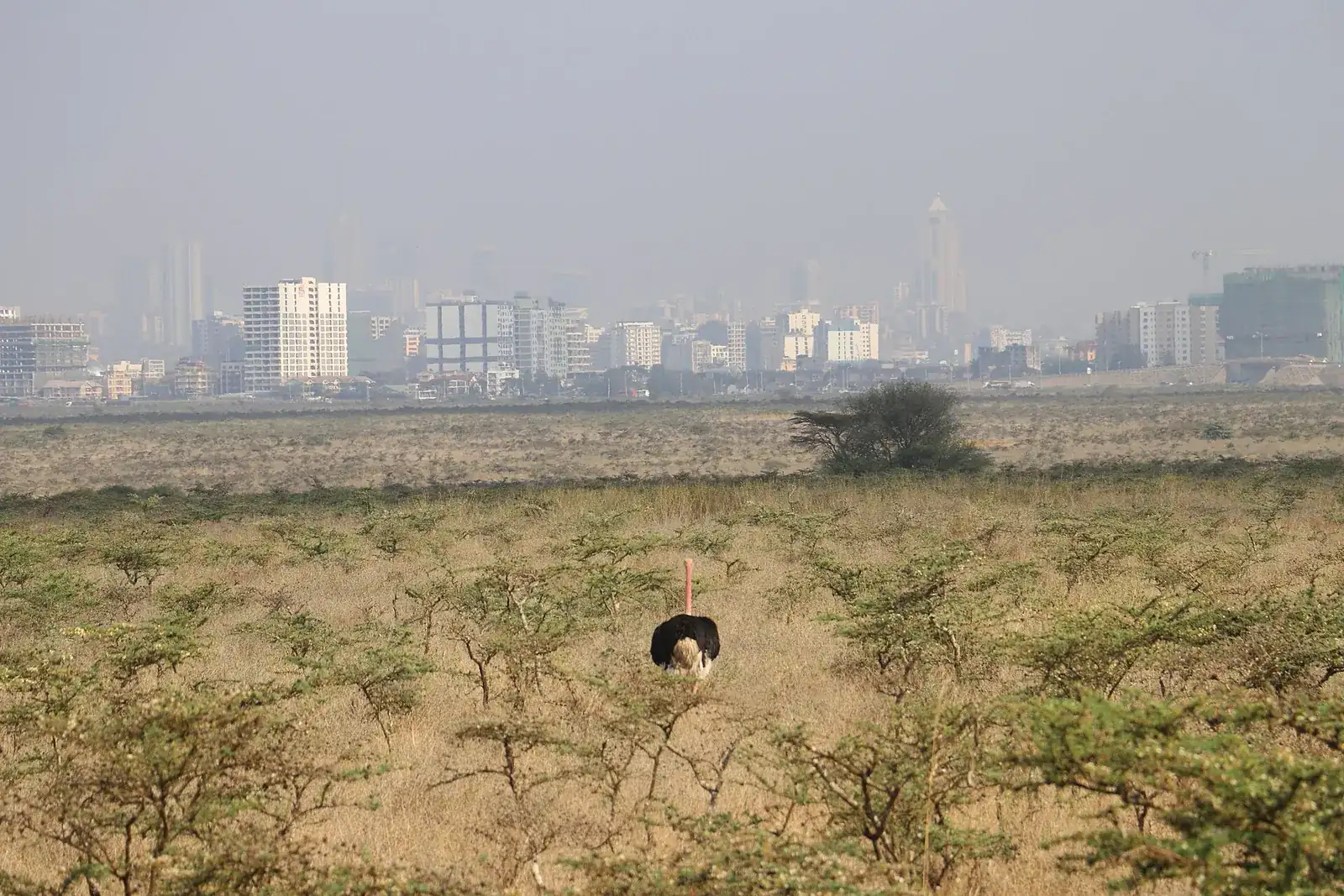
The city skyline can be visible from parts of the landscape, but this remains a wildlife visit with normal park behaviour rules. Animals are not arranged in front of the skyline for a photograph. Follow the guide’s positioning and stay in authorised areas.
Rhino interest and other large mammals make the park more than an airport waiting room. Conversely, it is not a guarantee of every animal associated with Kenya. Tell the guide what you are interested in, then enjoy the species and habitats actually encountered.
Sources: KWS: Nairobi National Park
A useful day on the ground
Keep the park drive as the principal activity of that part of the day. Take a guide or operator whose vehicle, entry arrangements and pickup details are clear, and ask how breaks and meals will work. A booked duration should state whether it includes road transfers.
The Sheldrick nursery is a separate timed visit with its own advance booking. Its official page states that KWS park entry is additional and mandatory under the current arrangement. Do not assume a general park drive grants access to the nursery or that an intermediary’s receipt is the nursery’s confirmed reservation.
Sources: KWS: Nairobi National Park
What the price should include
Ask for a written breakdown that separates accommodation, transport, entry and optional activities. A room price alone does not establish whether meals, guiding, vehicle use or transfers are included. Check which costs are per person, per vehicle or per booking before comparing two totals.
The public sources linked below do not establish a universal current price for every local activity. Where an amount is not confirmed, obtain a dated quotation from the authority or the service provider. Keep its cancellation terms with the booking, including the procedure if weather changes the activity.
How it fits into a route
The park pairs naturally with a Nairobi stay and can be followed by a longer safari elsewhere. It should complement, not duplicate, every part of a short city itinerary.
If proceeding to Naivasha, Amboseli or a domestic flight, give the transfer its own space. A full park morning, a city museum, lunch across town and an afternoon flight can be much less realistic than the map suggests.
Sources: KWS: Nairobi National Park
Map reference
Approximate geographical reference: latitude -1.37, longitude 36.86. This locates the destination broadly; use the confirmed gate, airstrip, trailhead or accommodation pin for the actual journey.
-1.37, 36.86Sources: Wikidata - Nairobi National Park geographic record (CC0)
Questions & answers
How much is nonresident entry?
KWS publishes USD 80 for an adult and USD 40 for a child under its stated visitor categories.
Are there elephants?
KWS distinguishes Nairobi’s large-mammal mix from elephant destinations; do not book it as an elephant-viewing substitute for Amboseli.
Can I visit during a layover?
Only with legal entry and ample time after airport processing, road transfers and return check-in. Proximity alone does not establish feasibility.
Is the Sheldrick nursery included?
No. It requires its own confirmed advance booking, and the official nursery page states that KWS park entry is additional.
Do I need to sleep inside the park?
No. Many visits start from a Nairobi base with a prearranged vehicle and guide.
Sources & verification
Checked on 21 September 2026. Prices apply only to the visitor category and dates stated. Route timings, suggested stays and budget scenarios are editorial planning estimates unless a source is specified.
- KWS: Nairobi National Park - checked 20 September 2026.
- KWS conservation fees: October 2025 tariff - checked 20 September 2026.
- Sheldrick Wildlife Trust: Nairobi nursery visits - checked 20 September 2026.
- UK FCDO: Kenya safety and security - checked 20 September 2026.
- Wikidata - Nairobi National Park geographic record (CC0) - checked 21 September 2026. An approximate geographical reference, not a park gate, trailhead, hotel or navigation instruction. The original record may have coarse precision.
Published · Updated . Send a correction.